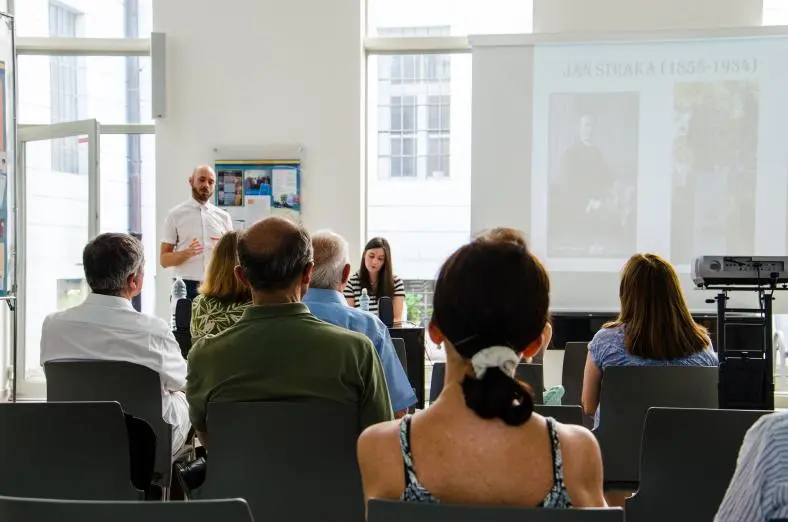
About the lecture
Ondrej Ficeri is a doctoral researcher at the Centre of Social and Psychological Sciences of the Slovak Academy of Sciences. He studied at universities and research institutes in Košice, Banská Bystrica, Prague and Budapest. His research concerns interethnic relations in urban space, particularly Košice's twentieth-century ethnonational transformation. His monograph Košice v slovenskej historiografii (2016) analyses how Slovak historians sought to nationalise the history of this multiethnic city in response to its Magyarisation before 1918 and in 1938–1945.
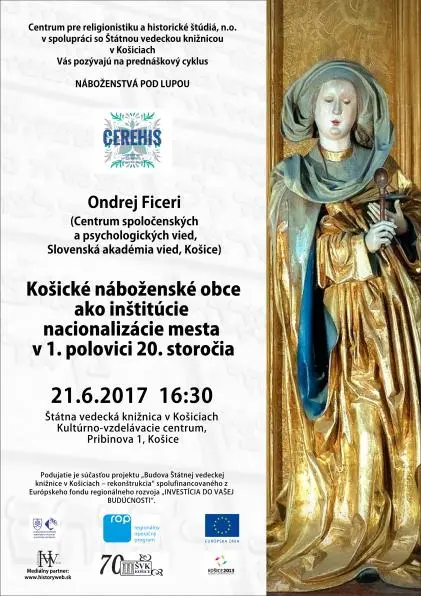
During the nineteenth and twentieth centuries, Hungarian and (Czecho-)Slovak political and intellectual elites contested the ‘national’ identity of strategically important Košice. Both communities sought to nationalise this ethnically diverse city in their favour. Territorial appropriation came first, followed by attempts to transform residents' ethnonational identities and property relations, bring public administration under state control, and appoint ‘nationally reliable’ people to church institutions. To what extent did Košice's religious communities participate in nationalising their city, and how far did they accommodate their own believers' ethnic diversity? What differences existed between communities, and how did they change under successive political authorities? The lecture ‘Košice Religious Communities as Institutions of the City's Nationalisation in the First Half of the Twentieth Century’ addresses these questions.
Event photo gallery: